

Working at height requires equipment that supports safety, efficiency, and reliable access. Self-propelled scissor lift platforms have become a preferred solution for construction, warehousing, manufacturing, maintenance, and facility management because they provide a stable elevated workspace and can move between work areas without manual pushing.
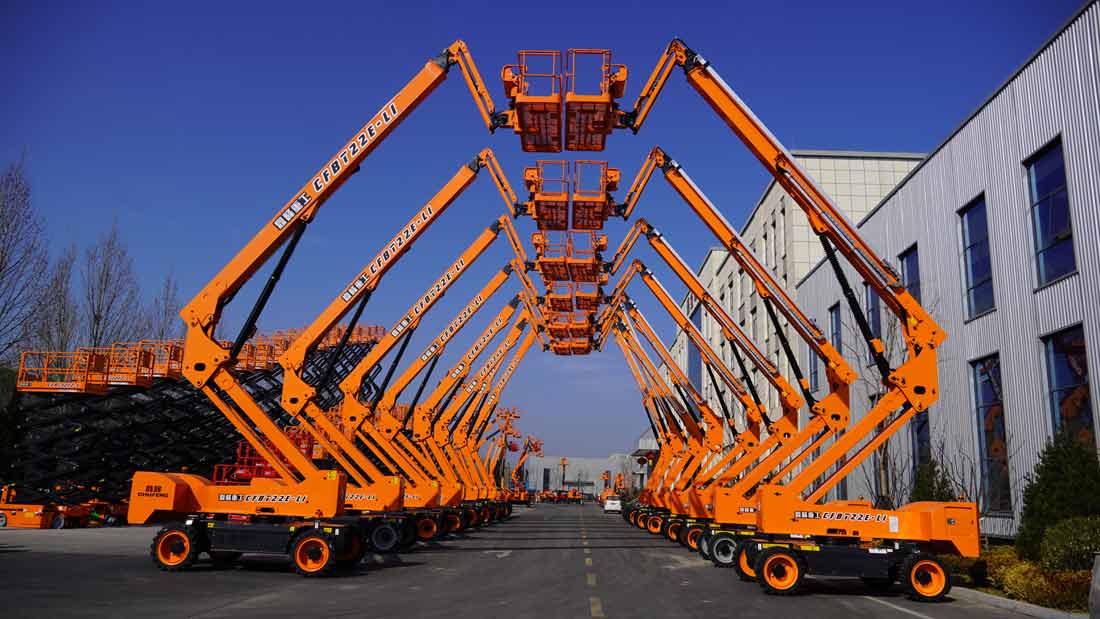
Traditional lift equipment, including ladders, scaffolding, manually pushed lifts, and basic vertical mast lifts, can still be useful for certain tasks. However, their limitations in mobility, platform space, setup time, and working efficiency can make them less suitable for larger or more demanding projects.
Self-Propelled Scissor Lift Platform vs. Traditional Equipment
| Feature | Self-Propelled Scissor Lift Platform | Ladders | Scaffolding | Manually Pushed Lifts |
|---|---|---|---|---|
| Mobility | Travels between work areas using onboard controls | Must be carried and repositioned manually | Requires dismantling or rebuilding to move | Must be pushed manually |
| Platform Space | Large platform for workers, tools, and materials | Limited standing space | Can provide large work areas | Usually limited platform space |
| Setup Time | Fast deployment | Fast for simple tasks | Time-consuming assembly | Requires manual positioning |
| Working Height | Suitable for medium and high-level access | Limited and less stable at height | Can reach high areas | Depends on model |
| Productivity | High for repeated elevated tasks | Best for short, simple work | Suitable for long-term fixed work | Lower efficiency over large areas |
| Indoor Use | Electric models are quiet and emission-free | Suitable for small tasks | Suitable but space-consuming | Suitable on smooth floors |
| Outdoor Use | Rough-terrain models handle demanding sites | Limited by ground condition | Requires stable setup area | Limited on uneven terrain |
| Safety Features | Guardrails, emergency controls, stable platform | Higher fall risk if misused | Requires correct assembly and inspection | Platform safety depends on model |
Mobility and Jobsite Efficiency
A major advantage of a self-propelled scissor lift platform is its ability to travel between work locations without requiring the operator to leave the platform. This is especially valuable in large warehouses, factories, construction sites, and commercial buildings where elevated tasks are spread across a wide area.
With a traditional ladder, workers must climb down, carry the ladder, position it again, and climb back up for every new task. This process increases downtime and can become physically demanding during long work shifts.
Scaffolding provides a stable work area, but moving it often requires dismantling, transporting, and rebuilding sections. This makes scaffolding more suitable for long-term work in one fixed location than for jobs that require frequent movement.
Manually pushed lifts reduce some of the climbing associated with ladders, but they still require workers to lower the platform and physically move the equipment to a new location.
A self-propelled scissor lift improves workflow by allowing teams to reposition the machine quickly, helping reduce unnecessary labor and increase daily output.
Platform Capacity and Working Space
Self-propelled scissor lifts provide a larger platform than ladders and many basic vertical lifts. The operator can bring tools, parts, materials, and additional workers onto the platform, depending on the rated load capacity.
This is particularly important for tasks such as:
Ceiling installation
Electrical wiring
HVAC maintenance
Pipe installation
Signage work
Lighting replacement
Painting and finishing
Warehouse rack maintenance
A ladder is generally designed for one person with limited tools. Carrying heavy materials while climbing can increase risk and reduce efficiency.
Scaffolding offers a large work area, but its setup requirements make it less flexible when access is needed in multiple locations. A scissor lift platform combines elevated access with the ability to move quickly across the jobsite.
Platform extensions are also available on many self-propelled scissor lift models, helping workers reach areas that are slightly beyond the edge of the machine.
Safety at Height
Safety is one of the most important factors when selecting lift equipment. Self-propelled scissor lift platforms are designed with guardrails, non-slip platforms, emergency stop buttons, safety sensors, and stable lifting mechanisms to support secure elevated work.
Compared with ladders, a scissor lift provides a more protected work environment. Workers can stand on a flat platform instead of balancing on narrow ladder steps. The guardrail system helps reduce fall risk when used correctly.
Scaffolding can also be safe when assembled, inspected, and used properly. However, it requires more components and careful installation. Missing guardrails, unstable bases, or poor assembly practices can create hazards.
Safe operation always depends on proper training, daily inspection, site conditions, and compliance with local regulations. Operators should never exceed platform capacity, use unstable objects to gain extra height, or operate the equipment on unsuitable ground.
Indoor Applications
Electric self-propelled scissor lifts are widely used indoors because they operate quietly and produce no exhaust emissions. They are suitable for warehouses, factories, airports, shopping centers, exhibition halls, schools, hospitals, and commercial buildings.
Indoor tasks often require frequent movement across smooth floors. A self-propelled electric scissor lift can travel efficiently through work areas and support maintenance teams throughout the day.
Common indoor applications include:
Warehouse inventory access
Rack inspection
Ceiling repairs
Fire protection system maintenance
Lighting replacement
Retail display installation
Indoor cleaning
Factory equipment maintenance
Ladders may be suitable for quick, low-height tasks, but they are less practical for repeated work at multiple elevated locations. Scaffolding can take up valuable floor space and may disrupt normal operations.
Outdoor and Rough-Terrain Applications
For outdoor construction, infrastructure, and industrial projects, rough-terrain self-propelled scissor lifts offer stronger drive performance and better ground clearance than standard indoor models.
These machines are designed for demanding jobsite conditions, including uneven surfaces, gravel, compacted soil, and outdoor work zones. They can support elevated work during building construction, steel installation, exterior maintenance, and equipment servicing.
Outdoor applications include:
Steel structure installation
Exterior wall work
Window installation
Roofing support tasks
Bridge maintenance
Pipeline installation
Industrial yard maintenance
Outdoor signage work
Traditional ladders can be difficult to position safely on uneven ground. Scaffolding may require extensive preparation and a stable base before work can begin. A rough-terrain scissor lift provides a more flexible solution when the work area changes frequently.
Labor and Cost Considerations
Traditional access equipment may have a lower initial purchase cost, especially ladders and basic manual lifts. However, the total cost of a project is influenced by labor time, setup requirements, transport, productivity, and work delays.
Scaffolding often requires trained personnel for assembly and disassembly. It may also require more storage space, transport planning, and inspection time. For projects with frequent changes in working location, these additional requirements can increase labor costs.
A self-propelled scissor lift platform may require a higher initial investment, but it can improve cost efficiency by reducing setup time and enabling faster movement between tasks. For contractors and facility managers who perform regular elevated work, the productivity benefits can be significant.
Rental is also an option for short-term projects or seasonal maintenance needs.
When Traditional Lift Equipment Is Still Suitable
Traditional lift equipment remains useful in certain situations. Ladders can be practical for quick, low-height inspection or repair tasks where a lift platform cannot access the area.
Scaffolding can be a suitable option for long-duration projects that require workers to cover a large fixed surface, such as façade renovation or large-scale painting.
Manually pushed lifts may be appropriate for small indoor locations with limited budgets and occasional elevated work requirements.
The key is to match the equipment to the job. For repeated work at height, frequent repositioning, multiple workers, or material handling, a self-propelled scissor lift platform usually provides a more productive and flexible solution.
How to Choose the Right Self-Propelled Scissor Lift Platform
Before selecting a scissor lift, consider the following requirements:
Required working height
Platform capacity
Number of workers on the platform
Tools and materials to be carried
Indoor or outdoor work environment
Ground conditions
Doorway, aisle, and access width
Required platform extension
Daily operating hours
Available charging or fueling facilities
Electric models are generally best for indoor work on flat surfaces. Rough-terrain models are more suitable for outdoor projects and uneven terrain. Selecting the correct platform size and load capacity helps improve both safety and productivity.
Frequently Asked Questions
Is a self-propelled scissor lift safer than a ladder?
A self-propelled scissor lift provides a stable platform with guardrails and space for tools and materials. When operated correctly, it can reduce many of the risks associated with repeated ladder climbing and limited working space.
Is a scissor lift better than scaffolding?
A scissor lift is often better for tasks that require frequent movement between work areas. Scaffolding can be more suitable for long-term work on one large, fixed surface.
Can a self-propelled scissor lift be used indoors?
Yes. Electric self-propelled scissor lifts are designed for indoor environments such as warehouses, factories, shopping malls, and maintenance facilities.
Can a self-propelled scissor lift work on uneven ground?
Standard electric scissor lifts are best used on smooth and level surfaces. For uneven outdoor ground, a rough-terrain self-propelled scissor lift is the more suitable choice.
Why choose a CFMG self-propelled scissor lift platform?
CFMG self-propelled scissor lift platforms provide practical elevated access solutions for a wide range of industries. They help operators work efficiently at height while supporting safer access, flexible movement, and reliable jobsite performance.